NAIROBI, KENYA — The pitch, delivered by a French president standing beside a Kenyan one, was almost jarring in its historical audacity. Emmanuel Macron, whose country once ruled a vast swath of West and Central Africa through a system so intimate it had its own name—Françafrique—stood before more than thirty African heads of state and promised a different kind of relationship. Not aid. Not charity. “Co-investment.”
The occasion was the Africa Forward Summit in May, the first such gathering France had ever held in an English-speaking African country. The numbers were substantial: €23 billion, or roughly $27 billion, in announced investments, split between French and African firms, targeting energy, agriculture, and artificial intelligence. But the substance mattered less than the choreography. Macron had come to Nairobi, rather than summoning African leaders to Paris, because the ground beneath the old order had shifted.
Africa, long treated as the world’s extraction zone—a place to dig, pump, and haul away—has become something else entirely. It is now a contested terrain where Gulf states, China, Russia, Turkey, India, and a suddenly anxious Europe all compete for influence, resources, and alignment. Yet the more interesting story is not that outsiders want a piece of Africa. It is that Africans have gotten remarkably good at making them compete for it.
The New Scramble Is Not Like the Old One
The comparison to the 19th-century Scramble for Africa is tempting and mostly wrong. As one recent academic volume puts it, the contest unfolding today is “a war in rather than for the continent”: not a race to carve up territory, but a struggle waged through Africa’s resources, infrastructure corridors, digital networks, and political alignments. The prize is not colonies. It is leverage in a fragmenting global order.
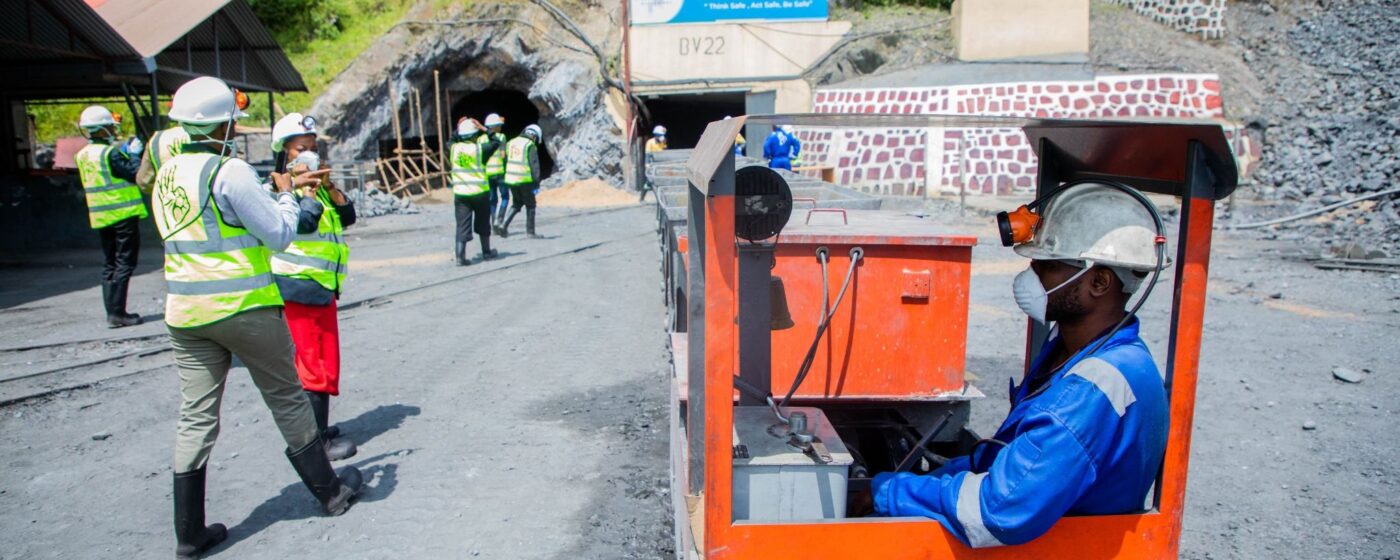
The numbers behind the attention are not hard to find. Africa’s economies are projected to grow at 4.2 percent in 2026, moderating slightly from 4.4 percent the year before, with twenty-two countries having posted growth above 5 percent in 2025. The continent holds roughly 30 percent of the world’s critical mineral reserves, including over 70 percent of cobalt, the backbone of electric vehicle batteries and defense systems. Its population, already 1.3 billion, is the youngest on earth (65 percent under thirty), and its consumer market is expected to swell from $1.4 trillion in 2015 to $2.5 trillion by 2030. It also holds roughly 60 percent of the world’s uncultivated arable land, a fact that becomes more consequential with every global food shock.
None of this is news to the Chinese, who have spent two decades building the infrastructure and trade relationships that made them Africa’s largest trading partner, with volumes approaching $300 billion annually. Nor to the Russians, whose security arrangements in the Sahel (disinformation, mercenaries, and arms) have filled the vacuum left by departing French forces. Nor to the Gulf states, whose sovereign wealth funds and port operators have quietly acquired stakes in roughly fifteen African ports, turning the Red Sea and Indian Ocean littorals into extensions of their own strategic depth.
What is new is the speed at which middle powers have entered the game. Turkey, with its drones and construction firms. India, with generic pharmaceuticals and digital infrastructure. Saudi Arabia and the UAE, backing opposing sides in Sudan’s civil war while courting mineral-rich governments across the continent. The old binary of “Western versus Chinese” influence has dissolved into a crowded, multi-polar marketplace. And in a marketplace, the seller gains power.
The Sovereignty Refrain
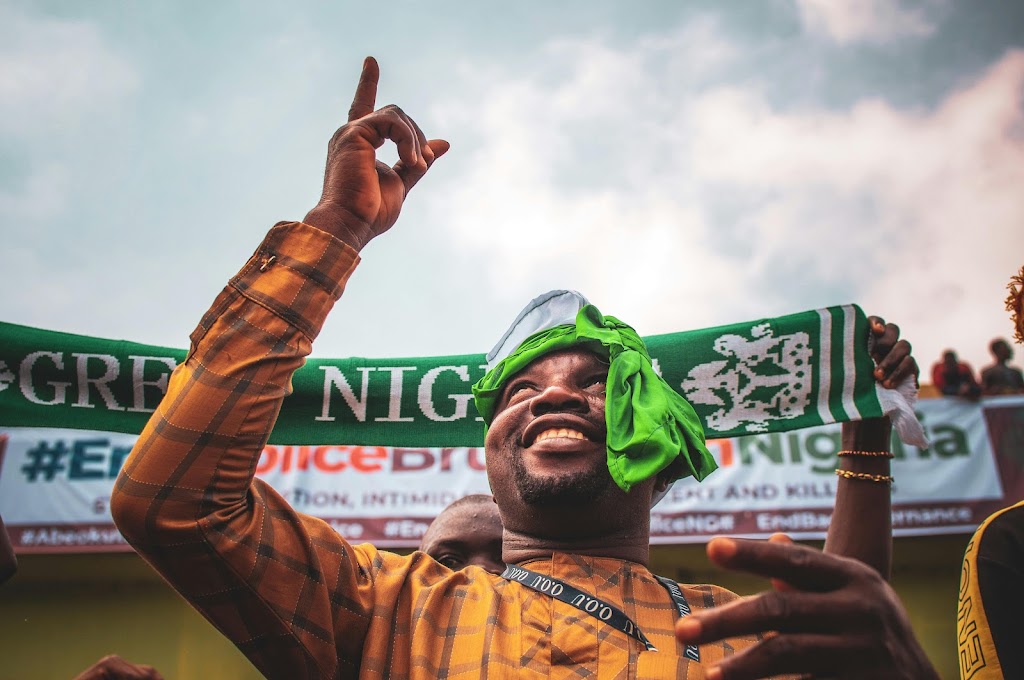
Listen closely to what African leaders say at these summits, and a phrase recurs with almost liturgical regularity: sovereign equality. Kenyan President William Ruto used the word “sovereignty” eight times in a single speech in Nairobi. He told the gathering that future partnerships “must not be built on dependency but on sovereign equality, not on aid or charity but on mutually beneficial investment, and not on extraction or exploitation but on win-win engagements.”
This is not merely rhetoric, though it is partly that. It reflects a genuine shift in bargaining power. When the Democratic Republic of Congo negotiates with Washington over cobalt, it does so knowing that the United States wants to break China’s stranglehold on the mineral, and that the DRC’s leverage extends beyond the mine to the security crisis in its east, where American involvement is a card Kinshasa can play. When Zambia restructures its debt, it does so in a system where China, private bondholders, and Western lenders all have competing interests, and where the African borrower can, at least sometimes, play them against one another.
The most concrete expression of this assertiveness is institutional. African states have, for years, demanded two permanent seats on the UN Security Council, with full veto rights, plus five elected non-permanent seats (up from the current three). The Committee of Ten, the African Union body tasked with this campaign, has secured expressions of support from all five current permanent members, though the details remain unresolved. It is a slow, grinding diplomatic effort, but it is one in which Africa’s fifty-four UN votes give it a weight that no great power can ignore.
Then there is the money question. Egyptian President Abdel Fattah Al-Sisi used the Nairobi summit to deliver a blunt warning: a large number of African nations now spend more on debt service than on health and education combined. He called for debt-for-development swaps and an overhaul of a global financial architecture that prices African risk at levels that make borrowing punitive. Ruto, for his part, argued that the continent is not actually short of capital. African pension funds, insurance firms, and reinsurance institutions, he said, collectively hold more than $4 trillion in savings that remain underutilized. The problem is not a lack of money. It is a lack of mechanisms to deploy it on African terms.
Whether this translates into real financial sovereignty is another matter. The African Development Bank estimates the continent’s annual development financing gap at over $1.3 trillion, and it argues that with better domestic resource mobilization, more efficient public investment, and crackdowns on illicit flows, Africa could unlock up to $1.43 trillion annually. That is a big “with.” But the intellectual shift, from asking what outsiders can provide to asking what Africans can mobilize themselves, is significant.
The Risk of Romanticizing Agency
There is a temptation, in telling this story, to overcorrect. For decades, Africa was portrayed in Western media as a passive recipient of either charity or exploitation. The pendulum swing toward “African agency” is overdue and largely accurate. But agency is not evenly distributed, and it is not always virtuous.
The same leverage that allows the DRC to court American investment in its cobalt sector also allows Congolese elites to use mineral deals to entrench their own political survival, often at the expense of peace in the east. The coups in Mali, Niger, and Burkina Faso were, in part, expressions of popular anger at corrupt and ineffective governments, but they also created openings for Russian disinformation and mercenary arrangements that have not delivered the security they promised. The Council on Foreign Relations’ recent assessment is stark: over the next decade, some African states will become “highly dependent on external support” and see their authority “dramatically constrained,” while others will become “more empowered, taking advantage of global competition for resources”. The divergence between these trajectories will define the continent’s next chapter.
The infrastructure of extraction (ports, railways, pipelines) remains largely oriented toward export, not internal integration. Intra-African trade, while growing, is still a fraction of what it could be. The African Continental Free Trade Area exists on paper; making it real requires the kind of political will that has historically been in short supply. And the demographic dividend that everyone praises can just as easily become a demographic time bomb if the jobs do not materialize for the hundreds of millions of young people entering labor markets in the coming decades.
What the Outsiders Are Really After
It is worth being precise about what each suitor actually wants, because the competition is not symmetrical.
China wants resources, markets, and political alignment in multilateral forums. Its infrastructure lending has slowed from the heady days of the Belt and Road boom, but its trade relationship remains dominant, and its media and educational footprint is expanding. The United States, after years of relative neglect, is playing catch-up with a transactional bent: the Angola-to-DRC transmission corridor, for instance, is designed explicitly to power cobalt mining for American supply chains. The EU talks a good game about “partnership of equals” but has struggled to shed its normative, conditionality-heavy approach, and its credibility suffered when the Ukraine war forced it to prioritize its own energy security over African summit commitments. Russia offers security services and disinformation, with little economic substance beyond arms sales. The Gulf states want ports, farmland, and influence, and they have the capital to move quickly and the political flexibility to deal with governments that Western capitals find distasteful.
The one thing all of them share is a desire to secure access to Africa’s minerals, land, and strategic positions on favorable terms. The question is whether Africans can extract a better deal than the one the last century offered. The evidence so far is mixed but not discouraging. The language of “sovereign equality” may be aspirational, but it is not empty. The summits may be choreographed, but the choreography has changed. The French president came to Nairobi. The Chinese foreign minister makes an annual New Year’s tour of African capitals. The Americans, the Turks, the Indians, the Emiratis: they all come now, bearing investment frameworks and partnership declarations.
Whether this translates into development that reaches beyond capital cities and mining enclaves is the question that will determine whether the current moment is a genuine turning point or merely a reshuffling of patrons. Ruto, for one, is betting that the answer lies in self-reliance. “If our own private sector does not have confidence to invest in the continent,” he asked in Nairobi, “how will others from outside do it?”
It is a fair question. The outsiders, for now, are not going anywhere. The Africans are learning to make them wait.