Written by: Salamatu Alabi
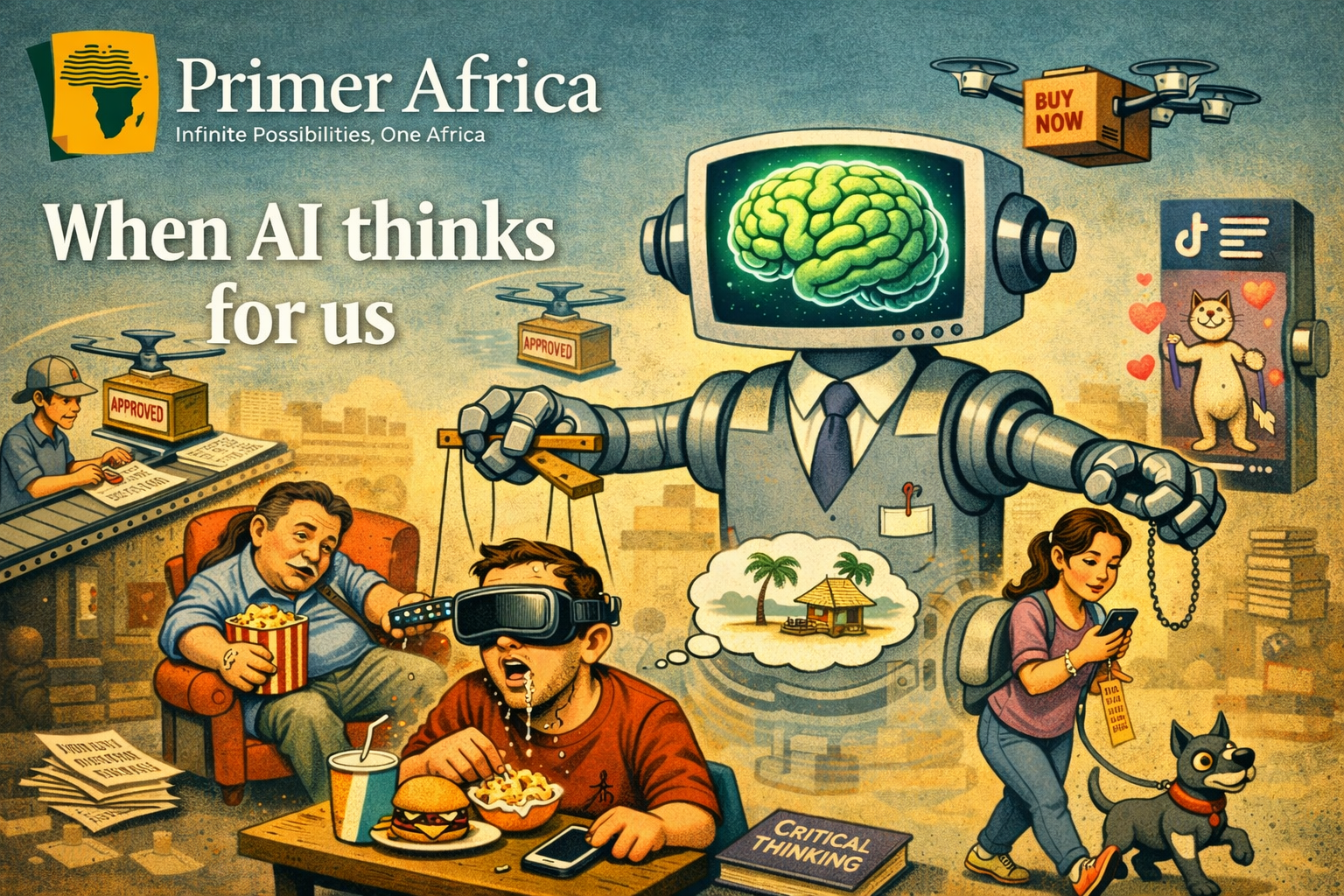
AI was created to help us, not to take away what makes us human. It began in 1956 at the Dartmouth Summer Research Project on Artificial Intelligence. The goal back then was to build machines that could mimic human intelligence and assist with everyday tasks. That idea still stands. But today, we’re at a point where many people depend on AI not just for help, but for most of their thinking and creativity. This not only impedes your critical thinking skills but leads to creative stagnation.
The question now is; is that really what we want to see in society; lack of depth and originality? For creatives, this sounds like a win. Writers use AI to draft, edit, and proofread their work. Business owners use it to design logos, build strategies, or generate content. Students rely on it for schoolwork. Coders, designers, marketers, and even musicians have found ways to use AI to move faster and do more. It helps reduce decision fatigue and makes big tasks feel manageable. And for those just starting out, it saves time and cuts costs.
But there’s a flip side. This tension is already visible in how quickly AI tools are being absorbed into everyday life. In some countries, adoption has accelerated at remarkable speed. For example, recent statistics suggest that Kenya ranks among the highest globally in ChatGPT usage, with a large share of internet users engaging AI tools regularly. On the surface, this reflects curiosity and digital openness. But it also raises a deeper concern: when adoption outpaces reflection, especially among young people and students, tools designed to assist thinking can quietly begin to replace it.
Too much reliance on AI can lead to creative stagnation. A study shows that overusing AI reduces originality. That’s easy to see. Most AI-generated content online today sounds the same. It lacks voice, depth, and feeling. There’s no personal story in it. No struggle. No joy. Just output.
Overexposure to AI can also lead to decision paralysis. You start second-guessing your ideas and stop trusting your own process. The more you use AI to think for you, the more distant you become from your own work. It feels like you’re creating, but you’re not really connected to what you’re making. That sense of ownership and pride disappears.
To avoid this, balance is key. Use AI as a tool, not a crutch. Let it support your ideas, not take over the process. You can set rules for yourself. For example, only use AI at the editing stage, or only when you’re blocked. Don’t let it do the whole job. Also, learn how to give better instructions. AI only follows your lead. The quality of the output depends on how you guide it. This means you have to be thoughtful. Know what you want before you ask. And that is why it is advisable to be familiar with prompt engineering and priming.
Finally, let AI spark your thinking; not replace it. You’re still the artist. AI is just your assistant. Real creativity comes from effort, honesty, and time. It’s not about producing more. It’s about making something real.